
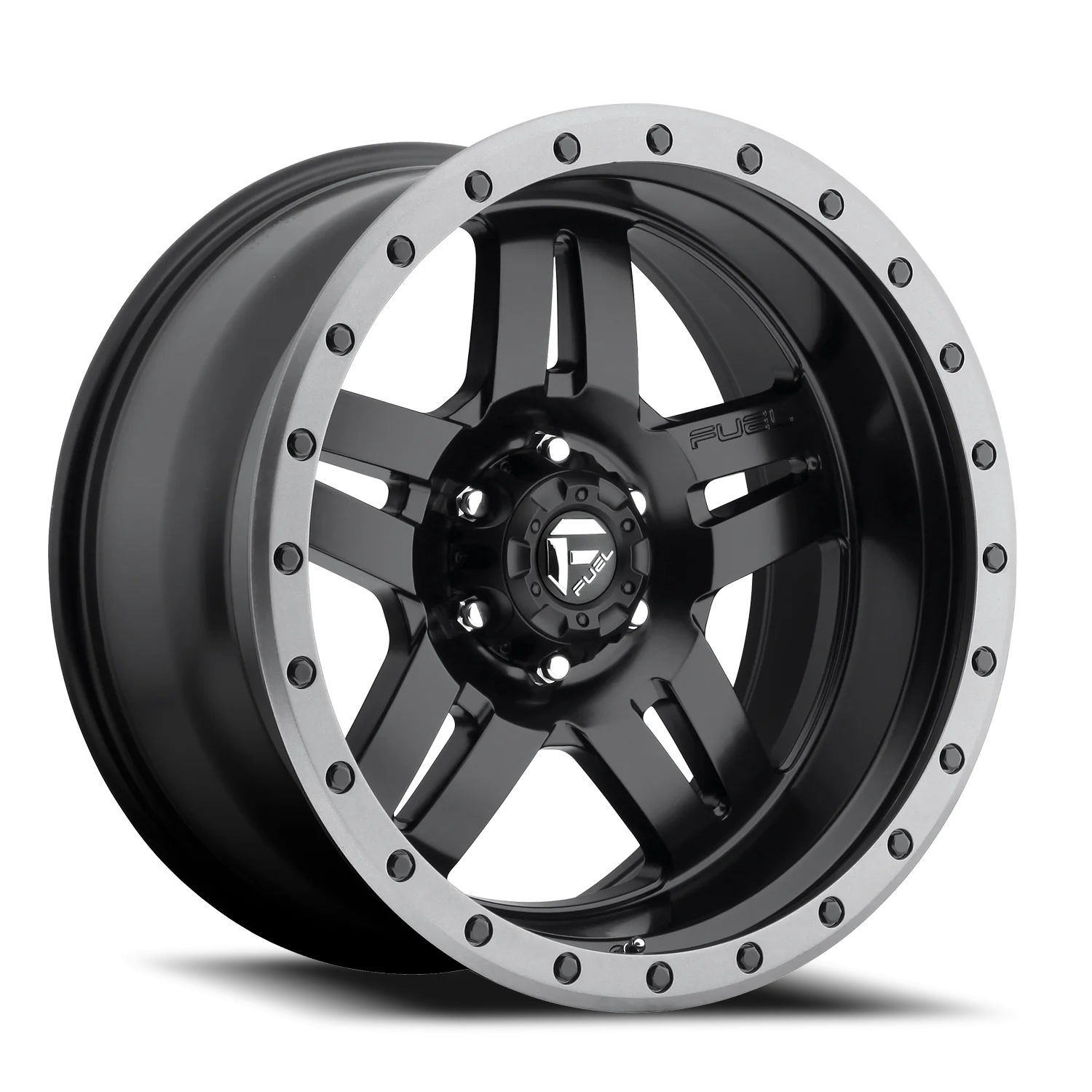
8×170 & 8×180 Bolt Patterns: Heavy-Duty Truck Wheel Guide
Eight-lug wheels look similar enough that people assume they are interchangeable. They are not, and the difference between 8×170 and 8×180 is only 10mm — small enough to look like it might work, large enough that forcing it will destroy your studs and, eventually, your hub.
This guide covers which trucks use which pattern, what to check before buying, and why heavy-duty wheel selection is a different exercise than half-ton wheel shopping.
What the Numbers Mean
An 8×170 bolt pattern means eight lugs arranged on a circle 170mm in diameter. 8×180 means the same eight lugs on a 180mm circle. That 10mm difference in bolt circle diameter is measured across the center of the hub — and there is no adapter, no “close enough,” and no safe way to make one fit the other.
Which Trucks Use 8×170
8×170 is Ford’s heavy-duty pattern:
- Ford F-250 Super Duty
- Ford F-350 Super Duty (single rear wheel and dually)
- Ford F-450 in some configurations
- Ford Excursion (later production)
Hub bore is typically 125mm. Thread size is M14x1.5 on modern trucks.
Which Trucks Use 8×180
8×180 is the GM heavy-duty pattern, used from roughly 2011 onward:
- Chevrolet Silverado 2500HD and 3500HD
- GMC Sierra 2500HD and 3500HD
Hub bore is typically 124.2mm. Note that GM heavy-duty trucks built before the 8×180 changeover used 8×165.1 — so model year matters enormously if you are buying used wheels.
And 8×165.1 — The Third One People Forget
8×165.1 (also written 8×6.5″) covers:
- Ram 2500 and 3500
- Older Chevrolet and GMC heavy-duty trucks
- Older Ford Super Duty (pre-1999 in some configurations)
So on a used-wheel listing, “8 lug” tells you almost nothing. You need the actual bolt circle measurement and the year and model of the donor truck.
How to Measure an 8-Lug Pattern
Measuring eight-lug patterns is easier than measuring five-lug, because opposite studs are directly across from each other. Measure center-to-center from any stud to the stud directly opposite it. That measurement is your bolt circle diameter.
If you get roughly 170mm (6.7″), you have 8×170. Roughly 180mm (7.09″) is 8×180. Roughly 165mm (6.5″) is 8×165.1. Measure carefully — the difference between 165 and 170 is only 5mm.
Load Rating Is Not Optional on 8-Lug Trucks
This is the part that separates heavy-duty wheel shopping from half-ton wheel shopping. An 8-lug truck exists because it carries or pulls weight. The wheel has to be rated for it.
For most single-rear-wheel F-250, F-350, 2500HD and 2500 trucks, look for a per-wheel load rating of at least 3,640 lbs. Dually rear wheels and 3500-series trucks may require more. The rating is stamped on the back of the wheel — verify it rather than trusting a product listing.
Construction matters here too. Our cast vs forged comparison explains why a forged wheel can hit a higher rating at lower weight, and when the price premium is justified.
Offset on Heavy-Duty Trucks
Aggressive negative offset is popular on 8-lug trucks, and it looks fantastic. But on a truck that tows, deep negative offset increases the leverage on your wheel bearings every time you load the trailer. A -76mm offset on a show truck is a style choice. The same offset on a truck pulling a 14,000 lb gooseneck every weekend is a maintenance schedule.
Our guide to positive and negative offset covers the mechanics in detail.
Dually-Specific Notes
If you run a dually, the rear wheels must be a matched dually-specific set. The offsets are engineered so the two rear tires maintain proper clearance under load. Mixing in a standard single-rear-wheel wheel will either not fit or will put the tires too close together, causing them to rub and fail.
Shop 8-Lug Fitment
Browse by pattern: 8×170 for Ford Super Duty, 8×180 for GM HD, and 8×165.1 for Ram and older HD trucks. Strong options in 8-lug come from Fuel, Hostile, Method, and Moto Metal.
Not sure which pattern your truck runs? Tell us the year, make, model and trim and we will confirm it before you order. Get in touch — we are in Mesa and Gilbert, and fitment checks are free.