
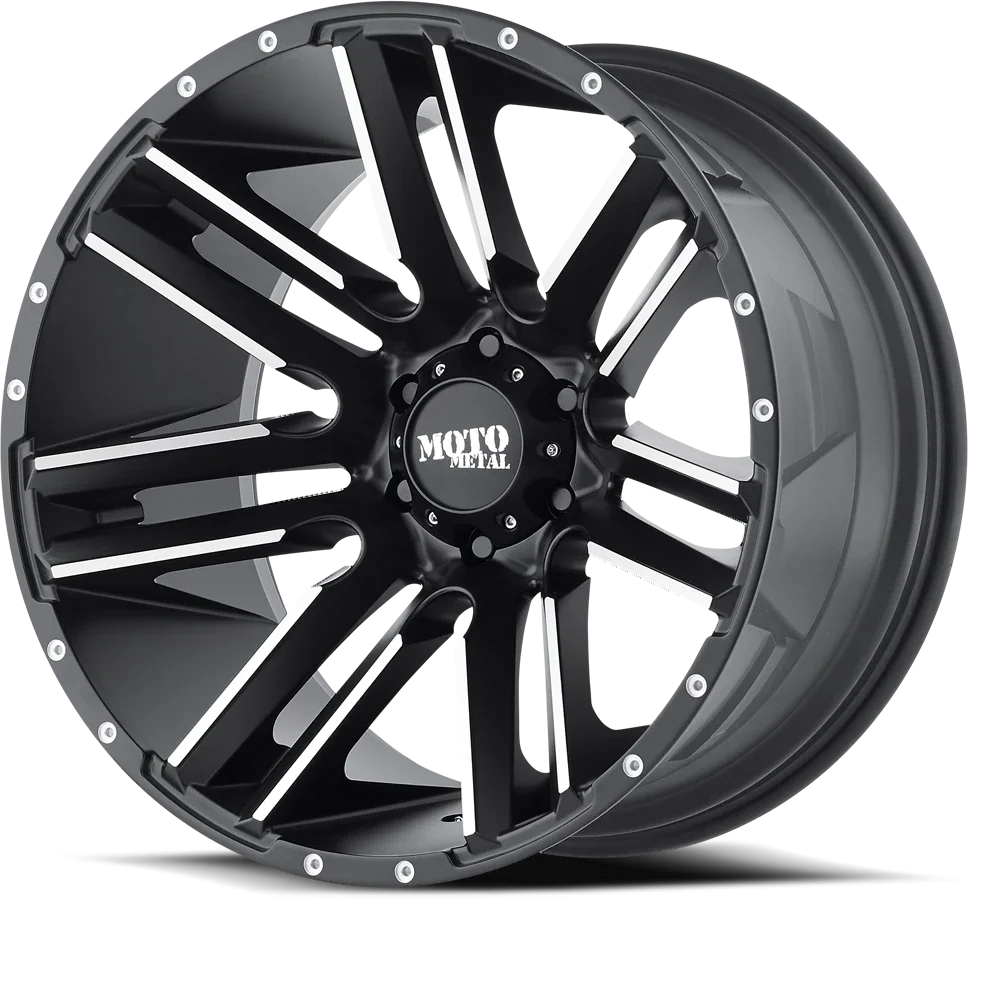
Wheel Backspacing vs Offset: What’s the Difference?
Two wheels can have identical offset and still fit differently. Two wheels can have identical backspacing and still sit differently. If that sounds contradictory, it is because offset and backspacing measure related but different things — and the missing variable is wheel width.
Understanding both takes about five minutes and saves you from ordering a set that rubs your upper control arm.
Offset: Distance From the Centerline
Offset is the distance from the wheel’s mounting surface (where it bolts to the hub) to the wheel’s centerline, measured in millimeters.
- Positive offset: Mounting surface sits toward the street side of centerline. The wheel tucks inward. Most factory trucks are positive.
- Zero offset: Mounting surface is exactly on centerline.
- Negative offset: Mounting surface sits toward the brake side. The wheel pushes outward. This is the aggressive truck look.
Offset tells you how the wheel is positioned relative to its own center — but it says nothing about how wide the wheel is, which is why it alone cannot tell you clearance.
Backspacing: Distance From the Inner Lip
Backspacing is the distance from the wheel’s mounting surface to the inner edge of the wheel, measured in inches. It answers a more direct question: how much wheel is behind the mounting pad, and therefore how close does it come to your suspension components?
This is why the off-road community tends to talk in backspacing while the street community talks in offset. If your concern is clearing an upper control arm or a brake caliper, backspacing is the number that maps to reality.
The Conversion Formula
They convert cleanly once you know wheel width:
Backspacing (in) = (Wheel width in inches ÷ 2) + (Offset in mm ÷ 25.4) + 0.5
The 0.5 accounts for the half-inch of flange on each side that manufacturers include but do not count in the stated width. A “9 inch” wheel is actually 10 inches from outer lip to inner lip.
Worked example: A 20×9 wheel with 0mm offset.
- 9 ÷ 2 = 4.5
- 0 ÷ 25.4 = 0
- 4.5 + 0 + 0.5 = 5.0 inches of backspacing
Second example: A 20×12 wheel with -44mm offset.
- 12 ÷ 2 = 6
- -44 ÷ 25.4 = -1.73
- 6 − 1.73 + 0.5 = 4.77 inches of backspacing
Notice something important: the 20×12 at -44mm has less backspacing than the 20×9 at 0mm, despite being three inches wider. It sticks out much further, but it actually sits slightly further from your suspension on the inside.
Why Width Changes Everything
This is the trap. Someone tells you “run 0 offset, it fits great on my truck.” But their truck has a 20×9 and yours has a 20×12. Same offset, radically different fitment — three extra inches of wheel, most of it hanging outside the fender.
Whenever someone gives you an offset recommendation, ask what width they are running. Without it, the number is close to meaningless.
Which Number Should You Use?
| Situation | Use |
|---|---|
| Ordering wheels online | Offset (this is how they are listed) |
| Checking inner suspension clearance | Backspacing |
| Predicting how far the wheel pokes | Offset + width together |
| Matching a friend’s setup | Both, plus their wheel width |
Real-World Clearance Points to Check
Before ordering, know what you are trying to clear:
- Upper control arm. The most common contact point on lifted IFS trucks. Backspacing that is too generous puts the barrel into the arm at full droop.
- Brake caliper. Larger brake packages need spoke clearance, not just backspacing. Some wheels physically will not seat over a big brake kit.
- Fender at full lock. Too little backspacing (too much poke) causes rubbing when you turn the wheel to the stop, especially over a bump.
- Inner fender liner. Often the first thing to make contact with a wider tire, and often trimmable.
A Practical Approach
If you want a safe starting point on a stock-height half-ton truck, a wheel in the 20×9 to 20×10 range with offset between 0mm and -18mm is very unlikely to cause problems. Going wider or more negative from there is a deliberate decision that usually pairs with a level or lift kit.
For the mechanical consequences of aggressive offset on steering feel and bearing life, see Negative vs Positive Offset Explained.
Let Us Run the Numbers
Send us your year, make, model, suspension setup, and the tire size you want to run. We will tell you the offset and backspacing range that actually works — before you pay for a set. Free fitment consultation at our Mesa and Gilbert locations.