
Best Wheels for Chevy Silverado 1500: Sizes, Offsets & Top Picks
The Silverado 1500 is one of the easiest trucks to build — and one of the easiest to get wrong. The factory wheel is conservative on purpose, so almost any aftermarket set will look better. The question is whether it will still drive right, clear the fenders at full lock, and keep your steering feel intact. This guide covers the numbers that actually matter for the Silverado 1500 and the setups that work on stock, leveled, and lifted trucks.
Silverado 1500 Bolt Pattern and Hub Specs
Modern Silverado 1500 trucks use a 6×139.7 bolt pattern (also written 6×5.5″). The hub bore is 78.1mm, which matters more than most people realize — a wheel with a larger bore needs a hub-centric ring, or you will feel a vibration at highway speed that no amount of balancing will fix.
- Bolt pattern: 6×139.7
- Hub bore: 78.1mm
- Thread size: M14x1.5
- Factory offset range: roughly +24mm to +31mm
If your wheels came off a Tahoe, Suburban, or Sierra 1500, the pattern is the same. Older GM half-tons (pre-2019 in some trims) can differ, so confirm before ordering.
Offset: The Number That Decides How Your Truck Looks and Drives
Offset is where most Silverado builds go sideways. Factory offset sits around +28mm, which tucks the wheel neatly under the fender. Aftermarket truck wheels commonly run 0mm, -12mm, -18mm, or -44mm — each step pushes the wheel further out.
Here is the honest trade-off:
- 0 to -12mm: A clean, slightly wider stance. Usually clears on a stock or leveled truck with a matching tire. Steering feel stays close to factory.
- -18 to -24mm: The classic aggressive look. Expect some rubbing at full lock without a level kit, and expect more stress on wheel bearings.
- -44mm and beyond: Deep-dish territory. This needs a lift, fender trimming, or both. It also noticeably increases scrub radius, which you will feel over broken pavement.
If you want a full breakdown of what positive and negative offset actually do to steering and bearing life, we covered it in detail in Negative vs Positive Offset Explained for Truck Owners.
Wheel Sizes That Work on a Silverado 1500
20 Inch — The Practical Sweet Spot
20 inch wheels remain the most popular Silverado size for good reason. You still get real tire sidewall, which means the ride stays comfortable and you are not replacing bent wheels after every Arizona pothole. A 20×9 or 20×10 with a 33-inch tire is a proven, drama-free combination on a leveled truck.
22 Inch — Street Presence
22 inch wheels fill the wheel well beautifully and suit trucks that live on pavement. The sidewall shrinks, so ride quality softens less over expansion joints, but on a daily-driven Silverado in Mesa or Gilbert it is a reasonable trade for the look.
24 Inch — Show Truck Territory
24 inch wheels are a commitment. They look outstanding on a lowered or air-ride Silverado, but the low-profile tire leaves almost nothing between the rim and the road. If you tow, haul, or hit dirt roads regularly, step down a size.
Brand Picks by Build Style
Off-road and overland: Fuel and Method both build Silverado-friendly fitments with sensible load ratings. Method in particular leans toward function over flash.
Aggressive street-truck look: Hostile and Black Rhino deliver the deep lip and milled accents that make a Silverado look intentional rather than accidental.
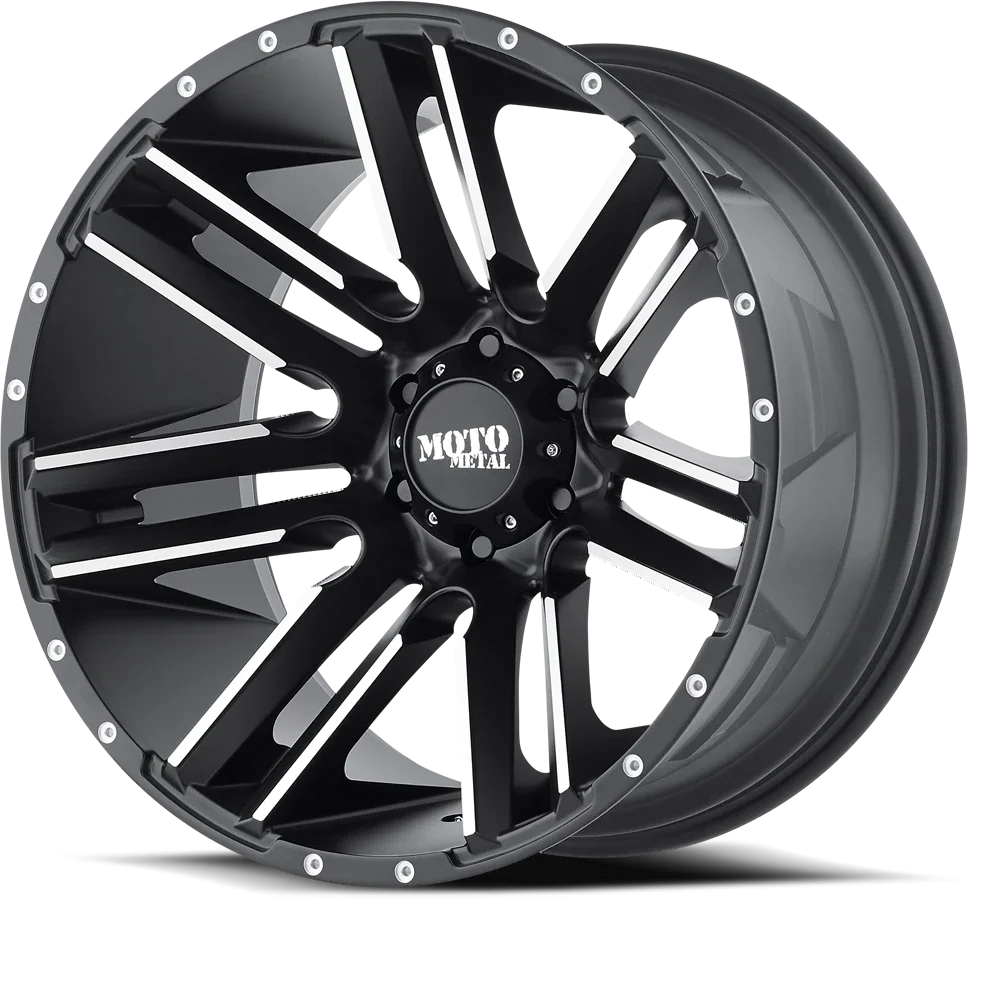
Clean and understated: Moto Metal and KMC cover the middle ground — better looking than factory, without shouting.
Common Silverado Fitment Mistakes
- Buying by look, not by offset. A wheel that photographs well on a lifted truck may rub badly on your stock-height Silverado.
- Ignoring hub bore. A vibration that appears only above 60 mph is almost always a centering issue, not a balance issue.
- Forgetting load rating. If you tow, the wheel needs to be rated for it. Show wheels and work wheels are not the same thing.
- Mismatched tire diameter. Going up in tire size without recalibrating throws off your speedometer and, on newer trucks, can confuse driver-assist systems.
Getting It Right in Mesa and Gilbert
Arizona is hard on wheels and tires. Summer pavement temperatures, monsoon debris, and the occasional dirt road all take a toll. Before you order, it is worth having someone confirm the offset against your actual suspension setup — a leveled Silverado and a stock one behave very differently with the same wheel.
Our team checks fitment against your exact truck, and mounting and balancing is included with every wheel and tire set. If you are still deciding how much to spend, our wheel budget guide breaks down what you actually get at each price tier.