
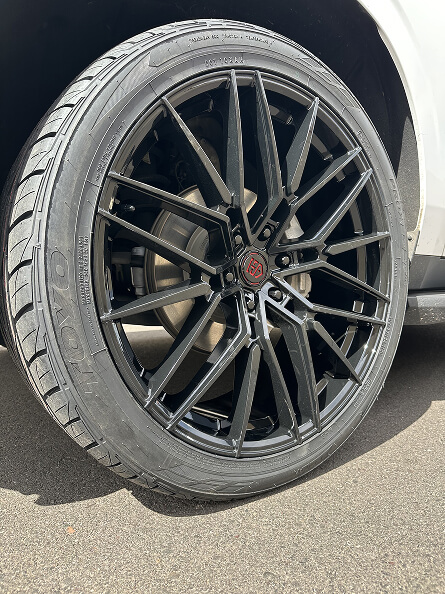
Four new tires are easy to see. The spare under the truck or behind the cargo floor is easy to overlook. When the main set changes, put the spare arrangement on the same work list.
The question is whether the spare remains suitable for the vehicle in its current configuration. A tire being round, inflated, and physically nearby is not enough information.
Identify what you have
Find the spare’s size, wheel specification, pressure requirement, and use instructions. Michelin distinguishes a temporary spare from a matching full-size spare and emphasizes following the applicable speed and distance limits. Use the labeling and vehicle manual for your specific arrangement rather than a universal limit found online.
If the spare came with the vehicle, record that fact. If a previous owner supplied it, gather whatever documentation is available and flag the missing information.
Review it with the new setup
Ask the installer to compare the spare arrangement with the proposed wheel-and-tire combination. For vehicles with four-wheel drive or all-wheel drive, follow the manufacturer’s instructions for differences between tires and permitted spare use. Do not apply a percentage tolerance from a different vehicle.
If the spare no longer provides an appropriate solution, discuss the alternatives before completing the upgrade. Include any storage or carrier requirements in that discussion.
Check the tools as a set
BFGoodrich recommends confirming that the spare, jack, and fitting lug wrench are present and functional before a tire problem occurs. Aftermarket hardware can introduce an extra key or socket that needs to travel with the vehicle.
- Locate the wheel-lock key and any special socket.
- Confirm the spare release or carrier mechanism can be accessed.
- Check that the vehicle’s instructions still apply to the current arrangement.
- Keep roadside-assistance contact information available.
Do these checks while the vehicle is safely parked. You do not need to stage an unnecessary roadside tire change to discover that a tool is missing.
Write a short contingency note
Store the spare’s use instructions, location, and tool requirements with your service records. Let other drivers know where the key is. If the plan is to call for assistance rather than change a tire yourself, make that decision explicit and keep the relevant contact details accessible.
The best time to settle these questions is while the new setup is being planned. It is easier to compare options in the shop than during a delayed trip.
Include the spare in your next wheel quote request or tire quote request. ICWT serves drivers in Mesa and Gilbert and can help identify the specifications that need checking.