
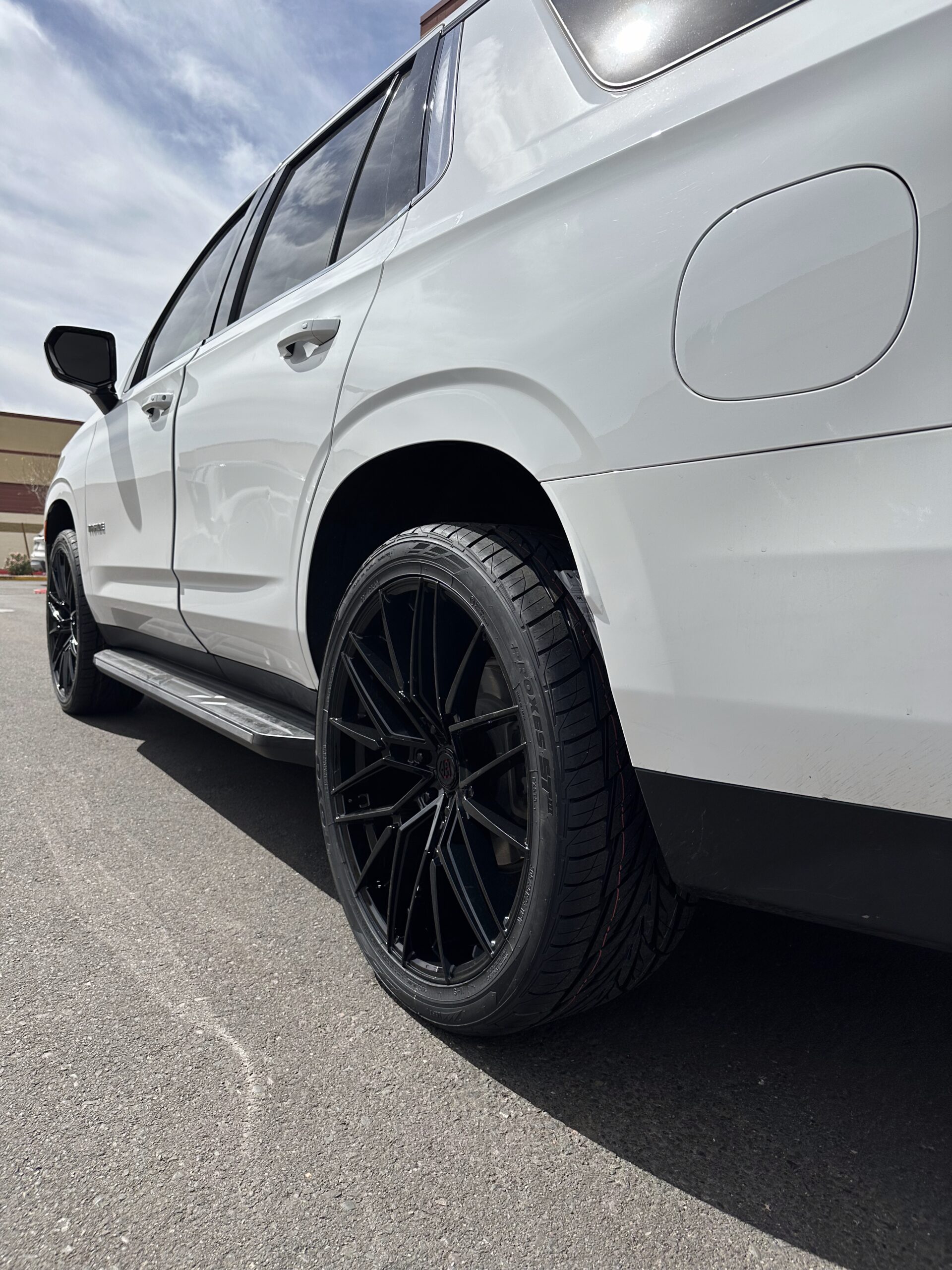
A new setup can look right in a parking space and still make contact when the steering turns or the suspension moves. If you hear rubbing after a wheel, tire, or suspension change, the next step is a fitment inspection.
Start by documenting the complete combination. Ordering another part before identifying the contact can leave you with a second expense and the same underlying issue.
Collect the exact specifications
Wheel Pros identifies dimensions such as diameter, width, offset, bolt pattern, center bore, and load rating as parts of wheel fitment. A diameter alone does not describe the assembly. Record the wheel part number and full tire specification, not just a description such as “twenties with bigger tires.”
Include the vehicle year, model, trim, drivetrain, and suspension modifications. For a used vehicle, explain which parts were already installed when you bought it and which details remain unknown.
Describe when the contact occurs
- Turning left, right, or both?
- Moving forward, reversing, or either direction?
- On a level surface, driveway transition, or rough road?
- With passengers or cargo, or also when lightly loaded?
- Since installation, or only after a later change?
Report what you have already observed. Do not repeatedly force the tire into contact to produce a better video. If contact is damaging the tire or affects steering, stop driving and arrange safe assistance.
Take useful photos safely
Photograph the parked vehicle from the side, the tire-size marking, and any visible contact mark you can reach safely. Keep the original-resolution files. A close-up plus a wider view helps the shop understand where the mark is located.
Leave wheel removal, lifting, and inaccessible inspections to someone with the correct equipment and training. A photo is a starting point for a conversation, not a remote clearance guarantee.
Ask for the reason behind a proposed change
Michelin recommends vehicle-approved tire specifications and warns against selecting replacements with inadequate load capacity. Ask the shop to explain how any proposed tire or wheel change meets those requirements as well as addressing the contact.
There is no universal instruction to add a spacer, trim a liner, or install a taller lift. The correct decision depends on what is touching, the application requirements, and the complete setup. Ask how the result will be checked after the work.
Keep the final combination on record
Save the installed part numbers, alignment information, and any restrictions or follow-up instructions. Those records are useful when it is time to replace one tire or order a matching wheel.
Send the details through ICWT’s wheel quote form, or contact our Mesa or Gilbert team to discuss a fitment review.