
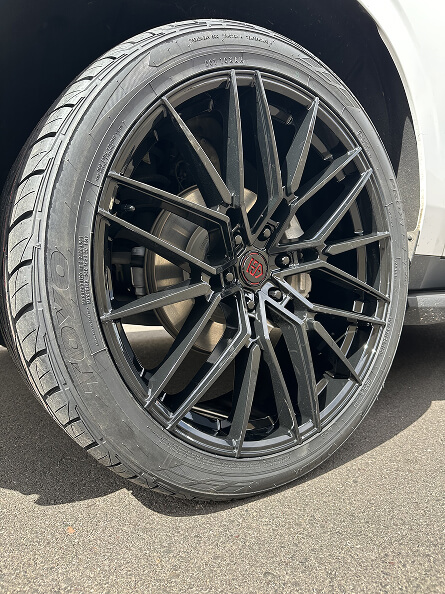
It is easy to remember the day you bought new truck tires and forget the next maintenance visit. A rotation plan works best when the interval, pattern, and starting mileage are written down at installation.
This becomes especially useful after a wheel-and-tire upgrade. The right plan follows your actual setup, including tire direction, front and rear sizes, and the vehicle manufacturer’s instructions.
Start with the applicable instructions
Michelin explains that moving tires between appropriate positions helps distribute wear. Follow the vehicle’s rotation schedule and check the tire manufacturer’s requirements as well. Do not assume that a generic interval or pattern covers every truck.
Directional tires must retain their required rolling direction. Different front and rear sizes can also limit the positions that are available. A matching-looking wheel face does not prove the front and rear assemblies are interchangeable.
Make an installation-day note
Save the following information alongside the invoice:
- Tire brand, model, size, and service description.
- Wheel specifications for the front and rear positions.
- Odometer reading and installation date.
- The rotation interval and source of that recommendation.
- Any restrictions on the rotation pattern.
- The pressure recommendation for the current setup.
Ask the shop to explain any restriction in ordinary language. “Front and rear sizes differ, so these assemblies cannot swap axles” is more useful to the next driver than an unexplained note saying “staggered.”
Bring changing symptoms to the visit
Tell the technician if the truck has developed a shake, a pull, unusual noise, or visible wear differences. A rotation appointment is an opportunity to discuss those changes. Moving a tire to another position does not establish why the condition developed.
If the shop recommends another service, ask which observation or measurement supports it. That keeps routine maintenance and diagnostic work clear on the estimate.
Keep a record you will actually use
A short phone note is enough: date, mileage, work performed, and next due point. Add the invoice photo and any measured tread depths. If several people drive the truck, share the reminder with the person who books its maintenance.
For a work truck, use mileage reminders as well as a calendar. A busy month can change the next service date. For an occasional-use truck, keep the calendar reminder so maintenance does not disappear just because mileage is low.
When requesting your next tire quote from ICWT, include the current setup and how you use the vehicle. Contact our Mesa or Gilbert team to discuss the maintenance questions you want addressed with the new set.