
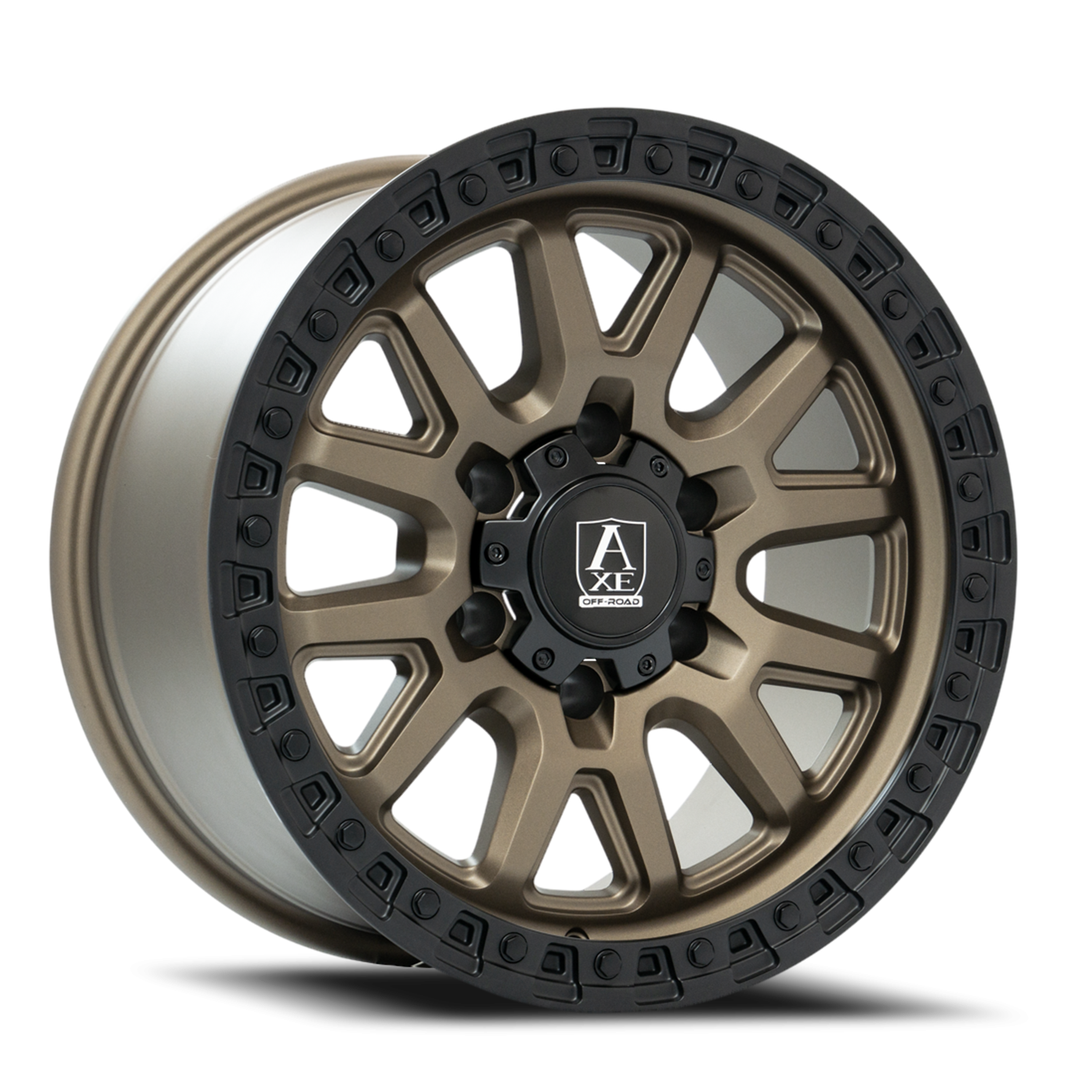
Best Wheels for Toyota Tacoma: 2026 Buying Guide
If you drive a Toyota Tacoma in Arizona, you already know the truck is built for both daily pavement and desert trails. The challenge is choosing wheels that match how you actually use it — whether that’s commuting through Mesa in 110-degree heat, hauling gear to a Gilbert job site, or kicking up dust on a weekend run east of town. In this guide we cover the real differences between cast and forged construction, when beadlock rings actually matter, and how offset changes after a lift. You’ll learn which sizes fit stock suspension, where offset numbers go after a lift, and which brands hold up best in our climate. By the end you’ll know exactly what to look for — and what to skip — when shopping for new wheels.
Understanding Tacoma Bolt Pattern and Offset
The factory bolt pattern on every Toyota Tacoma is 6×139.7mm — sometimes listed as 6×5.5 inches. That pattern hasn’t changed across generations, so any wheel designed for a 6-lug Toyota truck or many Nissan/Isuzu applications will fit your hubs. The more important number is offset. Stock Tacoma wheels typically run around +30mm to +35mm offset, which tucks the wheel under the fender and provides stable street manners.
The problem starts when you lift the truck. Adding a 2-inch or 3-inch suspension lift changes the control arm angles, and stock offset often leads to rubbing against the upper control arm (UCA) during turning or off-road flex. To clear larger tires and aftermarket UCAs, you’ll want an offset between 0mm and -12mm for lifted Tacomas. That pushes the wheel outboard, widening the track and improving stability on uneven terrain. For stock-height trucks, sticking close to factory offset avoids excessive poke and keeps the scrub radius predictable. A 17×8.5 wheel with +25mm to +30mm offset is a safe upgrade that fits 33-inch tires with minor trimming or no trimming at all on a stock suspension.
If you’re shopping wheels with the 6×139.7 bolt pattern, make sure the hub bore is at least 106mm or uses centering rings. Tacoma hubs are 106.1mm, so many aftermarket wheels (like Fuel or Method) come with a larger bore and include centering rings to prevent vibrations.
Wheel Size Options: 17×8.5, 17×9, 18×9, 20×10
Size affects ride quality, tire clearance, and the look of the truck. Here’s how the common sizes work on a Tacoma.
- 17×8.5 – The sweet spot for most Tacoma owners. Light, strong, and fits 33×12.50 tires with the right offset. Popular on TRD Off-Road builds and daily drivers. Works well with 285/70R17 tires.
- 17×9 – More rubber surface contact for off-road traction. Requires slightly more negative offset (around -6mm) to avoid rubbing at full lock. Good for 35-inch tires if you have a 3-inch lift and proper trimming.
- 18×9 – Offers a wider tire selection in street-biased sizes like 285/60R18 or 275/70R18. Common on Tacoma Limited and some aftermarket setups. Slightly heavier than 17s, but still manageable for daily driving.
- 20×10 – Strictly for looks. Expect a harsher ride because of lower-profile tires, less sidewall for absorbing Arizona washboard roads. Usually paired with 33-inch tires for a stance look. Not recommended if you actually off-road.
For a Tacoma that splits time between pavement and desert trails, 17×8.5 or 17×9 wheels strike the best balance. The extra sidewall protects the rim on sharp rocks and gives a smoother ride over broken pavement in Mesa and Gilbert.
Cast vs. Forged Wheels – What Matters for Daily Driving in Arizona
Most aftermarket wheels on the market are cast aluminum. The manufacturing process is efficient, and modern casting (including low-pressure and gravity casting) produces wheels strong enough for daily driving, occasional off-roading, and towing light loads. Brands like Fuel, Method, and Hostile use cast construction for the majority of their Tacoma fitments. These wheels hold up well in Arizona heat because the alloy composition is designed to resist thermal fatigue from repeated brake heat cycles.
Forged wheels start with a solid billet that is compressed under extreme pressure. The result is a denser, lighter structure with higher tensile strength. Forged wheels make sense if you’re chasing every pound in unsprung weight for rock crawling or sand dunes, but they cost two to three times more than cast equivalents. For the typical Tacoma owner driving on I-60 and hitting trails on weekends, cast wheels provide all the durability you need. The real enemy in Arizona is not wheel failure — it’s curb rash from tight parking in Gilbert strip malls and dust buildup on inner barrels that causes imbalance. Regular cleaning and balancing every 10,000 miles matters more than the construction method.
We carry cast wheels from Fuel, Hostile, and Moto Metal that pass SAE J2530 standards and are tested for load ratings that exceed Tacoma GVWR. For a lighter premium option, Method Race Wheels offers both cast and forged-in-house constructions, often with beadlock-compatible rings.
Beadlock vs. Simulated Beadlock – Do You Need Real Locking?
True beadlock wheels use a ring that clamps the tire bead against the outer rim. They require DOT approval for highway use; many are not street-legal unless specifically marked. Unless you’re running single-digit tire pressures in the rocks of Box Canyon or the Superstition Mountains, you don’t need real beadlocks. Simulated beadlock wheels have a decorative ring bolted to the outer lip that mimics the look but does not lock the tire. These are street-legal, easier to clean, and weigh less than real beadlocks.
For Arizona desert running at typical trail pressures of 18-22 PSI, a standard bead seat and a good tire bead hold fine. Simulated beadlocks let you get the aggressive off-road look without the weight penalty and maintenance. If you ever do decide to go with real beadlocks, make sure the wheel is specifically stamped with “DOT” and you check local laws — some Arizona counties enforce noise and tire protrusion rules.
Top Wheel Brands for Toyota Tacoma
- Fuel – Classic styles like the Fuel D579, D569, and D531. Machined faces with matte black or bronze accents. Good offset options for lifted Tacomas. Fuel wheels for Tacoma
- Method – Race-proven beadlock technology in both simulated and real beadlock. The Method 701, 703, and 305 are popular on second and third gen trucks. Method wheels for Toyota Tacoma
- Hostile – Aggressive split-spoke designs like the Hostile Aero. Often chosen for wide 17×9 or 18×9 setups with deep concave. Hostile wheels for Tacoma
- Moto Metal – Budget-friendly with durable clearcoat. The Moto Metal 970 and 962 are common on Tacoma work trucks and recreational builds. Moto Metal wheels for Tacoma
You can browse all fitments in our Tacoma wheel collection or shop all wheels by size.
Quick Comparison Table
| Brand | Model | Size | Offset | Weight (est.) | Price Range | Best For |
|---|---|---|---|---|---|---|
| Fuel | D571 Maverick | 17×8.5 | +20 / +12 | 27-29 lbs | $200-$280 | Daily + light off-road |
| Method | 701 Trail | 17×8.5 | +12 / +0 | 25-28 lbs | $300-$380 | Off-road focus |
| Hostile | Aero H107 | 17×9 | -6 / -12 | 30-32 lbs | $230-$310 | Stance/lifted builds |
| Moto Metal | 970 Torque | 17×8.5 | +15 / +10 | 29-31 lbs | $140-$190 | Budget daily driver |
Prices are per wheel and may vary with finish and availability.
Vehicle Fitment Notes
- Toyota Tacoma – All generations use the same 6×139.7 bolt pattern and 106.1mm hub bore.
- Toyota Tacoma SR5 – Factory 16-inch or 17-inch steel/alloy wheels. Upgrading to 17×8.5 typically requires no lift for 265/70R17 tires.
- Toyota Tacoma TRD Sport – Usually 17-inch wheels from factory. Aftermarket offsets around +15 to +20 work without rubbing.
- Toyota Tacoma TRD Off-Road – Stock 16-inch or 17-inch wheels. For 33-inch tires with 2-inch lift, use 0mm to -6mm offset.
- Toyota Tacoma TRD Pro – Factory 16-inch black wheels. Aftermarket upgrades often need hub-centric rings if bore is larger than 106.1mm.
- Toyota Tacoma Limited – Comes with 18-inch wheels. You can swap to 17-inch if you want more tire sidewall, but confirm brake caliper clearance.
- Toyota Tacoma – New generation still uses 6×139.7 bolt pattern. Offset preferences are similar to previous models.
FAQ
Do I need hub-centric rings for new wheels on my Tacoma?
Yes, if the wheel’s center bore is larger than 106.1mm. Many aftermarket wheels use 108mm or 112mm bores. Plastic centering rings cost a few dollars and prevent steering wheel vibration at highway speeds.
Will 17×9 wheels fit a stock Tacoma without rubbing?
It depends on offset and tire size. A 17×9 with +10 offset and 285/70R17 tires will likely rub on the front cab mount or mud flap at full turn on stock suspension. A 2-inch lift and aftermarket UCAs help. Stick with 17×8.5 if you want no trimming.
Can I reuse my factory TPMS sensors on new wheels?
Yes, if the new wheels have standard valve stems (most aftermarket wheels do). You may need metal or rubber valve stems compatible with TPMS. Some tire shops transfer the original sensors. If the wheels have a different depth, use TPMS extension or aftermarket sensors.
What offset should I choose for a 3-inch lift and 35-inch tires?
You typically want -12mm to -18mm offset on a 17×9 wheel. That pushes the tire out far enough to clear upper control arms and the frame at full lock. Expect fender trimming or aftermarket fiberglass fenders.
Do black wheels get too hot in Arizona summers?
Surface temperature is slightly higher than silver wheels in direct sun (maybe 10-20°F difference), but it doesn’t affect tire performance or wheel integrity. The bigger concern is brake dust buildup on dark finishes — clean regularly with a pH-neutral wheel cleaner.
Get the Right Fit – Mesa & Gilbert Customers
Choosing the best wheels for your Toyota Tacoma comes down to matching offset and size to your suspension setup and driving style. Whether you need a set of Fuel wheels for a lifted TRD Off-Road or a budget-friendly Moto Metal set for your daily SR5, our Mesa and Gilbert showrooms stock the most popular Tacoma-fit wheelsTacoma wheel fit