
ICWT • MESA & GILBERT · ROUGH COUNTRY 1307
What to Check Before Leveling a 2017 Chevy Silverado 1500
A practical guide to fitment, installation and planning your build.
A 2017 Silverado 1500 leveling kit should match the truck’s actual front suspension. Confirm 2WD or 4WD, identify the strut and control-arm hardware, and measure the stance before comparing kits. A healthy suspension and a small change in stance point to a different job from a truck that already needs new struts or will also get wider wheels.
1. Establish what is on the truck today
Start with the VIN and trim, then check the parts physically. A used Silverado can have replacement struts, aftermarket upper control arms or a spacer installed by a previous owner. Tell the shop about work you know of and send a clear front suspension photo if you have one. The manufacturer’s fitment notes should cover your drivetrain and any hardware distinctions it calls out.
Park on level ground with the tires set to the vehicle’s recommended cold pressures. Measure vertically from the hub center to the fender opening at all four corners and record the measurements by position. Take one set with the truck in its usual unloaded condition. If it regularly carries a toolbox, equipment or a trailer, tell the shop how it is normally loaded. Give the technician the numbers instead of estimating rake from a driveway photo. A large side-to-side difference warrants an inspection before choosing any kit.
2. Compare the installation paths
Keep healthy factory-style struts. A compatible spacer-based kit may suit a truck whose main goal is a modest stance change. Ask what the exact design changes about suspension travel and what the installer checks around the control arms, joints and driveline. A spacer quote should explain which existing parts will stay in service.
Replace worn struts. If the truck continues bouncing over bumps, has visible leakage or makes a new front-end noise, start with diagnosis. A manufacturer-approved leveling strut may combine height adjustment and damper replacement, but the shop should first check whether the symptoms come from the struts, joints, bushings or another component.
Plan wheels and tires at the same time. A leveling kit changes ride height, while wheel width and offset change where the tire sits. A tire can clear the outer fender and still contact an inner component or liner as the truck steers. If larger tires are the reason for the project, ask for a fitment review before ordering either part of the combination.
3. Read the fitment notes on the exact kit
Rough Country’s 2017 Silverado 1500 catalog includes spacer and replacement-strut approaches. Use the manufacturer’s listing for the individual part to check drivetrain, year, factory equipment and any other conditions. Ask the seller or installer to identify the hardware on the truck if the listing distinguishes factory arms or struts you cannot identify. Save the part number and instructions with the quote.
A listing that mentions a maximum tire size is describing a particular test combination or set of conditions. Confirm the actual tire model, wheel width and offset, and ask what clearance the shop will check through steering and suspension movement. If the truck keeps its factory wheels, include that in the quote request.
4. Compare two scopes of work
Consider two hypothetical 2017 trucks. One has a healthy front end, stays on the original wheels and spends the week on US 60. Its estimate might cover a compatible front kit, installation, alignment and a clearance check. The other has a clunk, unknown replacement struts and a planned wheel change. Its estimate should begin with inspection, then separate worn-part replacement from the leveling and wheel work. A similar advertised height can produce two very different invoices.
Before approving the work, ask for a written list of the kit, hardware, installation, alignment and any clearance checks or follow-up inspection. If the shop finds worn or seized parts, ask how it will document the finding and get approval for extra work. At pickup, request the final ride-height measurements and alignment results so you have a baseline if the truck gets different wheels later.
Compare kits in the ICWT catalog
Check the fitment notes for your truck before ordering.

2-inch front leveling kit
Rough Country · 1307
Check the factory-wheel spacer requirement in the instructions.
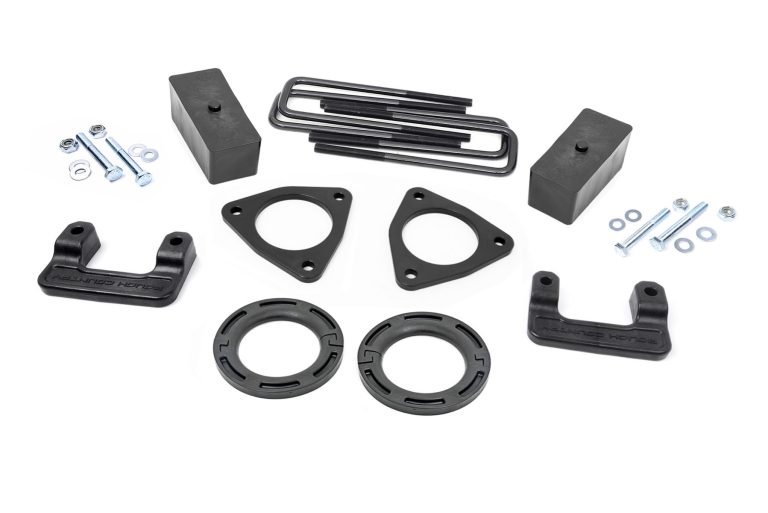
2.5-inch stamped-steel application
Rough Country · 1312
Confirm the factory control-arm type and other fitment notes before ordering.
See ICWT’s service details for Mesa and Gilbert, or request a quote for your vehicle.